
Updated November 1, 2026
A chemical peel can sound like a big commitment, especially if you are picturing days of dramatic shedding. In practice, the experience depends on the formula, your skin, and the preparation before your appointment.
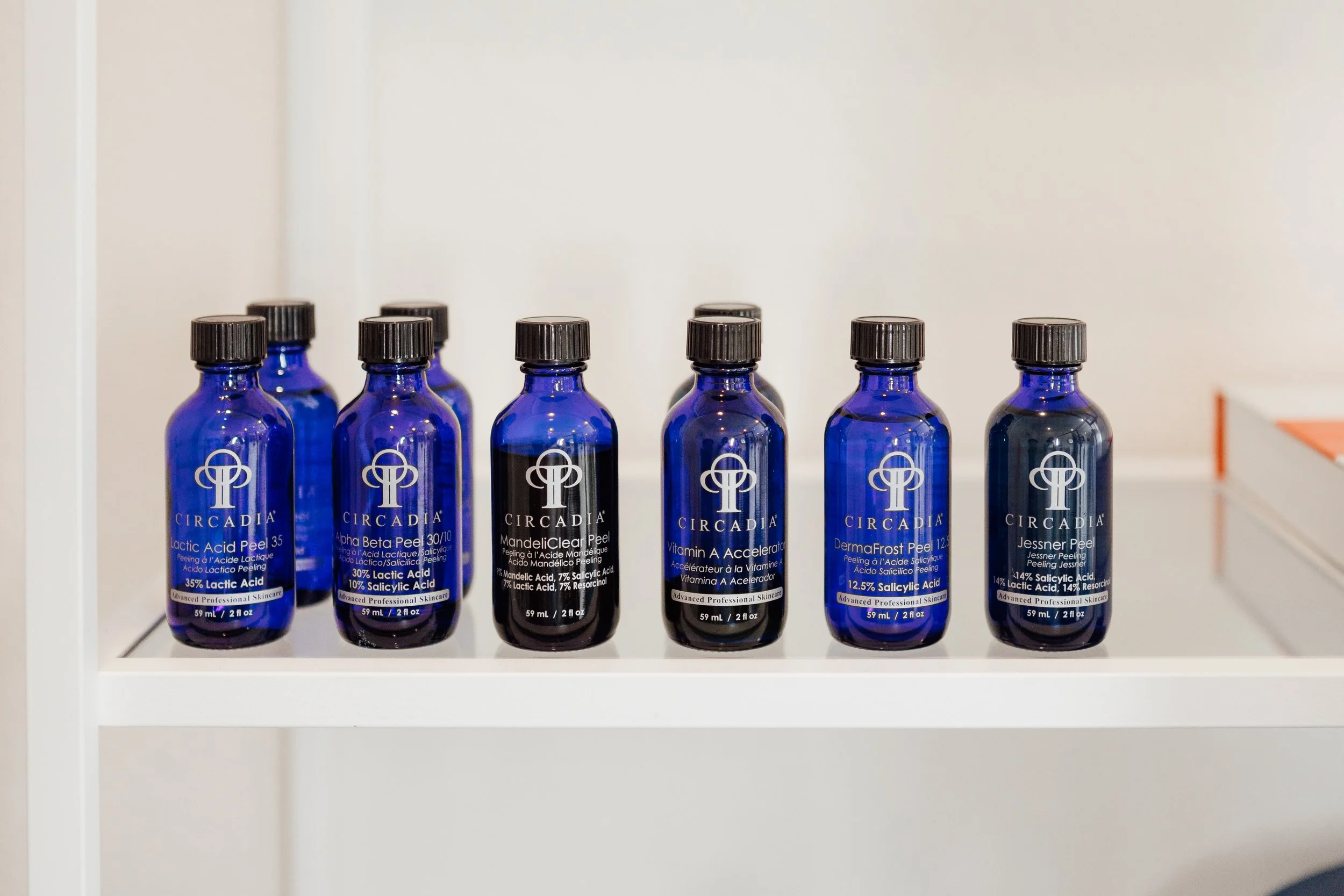
At The Face Space in Webster, we carry Circadia’s full professional peel range and frequently use MandeliClear for its versatility. Here is how the options differ, what they may help with, and what to consider before planning your visit.
How do chemical peels work?
Chemical peels use exfoliating ingredients to help older surface cells shed. Different acids and combinations work in different ways: lactic acid exfoliates while supporting hydration, and salicylic acid can work through oily buildup within pores.
The formula, skin preparation, and professional application all influence the experience. A higher percentage or more visible peeling does not automatically mean a better treatment for your skin.
What can a peel help improve?
Depending on the selected treatment, peels may help improve dullness, rough texture, congestion, uneven pigmentation, and the appearance of fine lines. Discoloration left after a breakout is different from an indented acne scar; identifying the concern helps us discuss realistic options.
Results vary. A peel is not a promise to erase every dark spot or permanently resolve melasma, and a single appointment may not achieve your full goal.
Which Circadia peels do we offer?
Our collection gives us several approaches to consider:
Lactic Acid: a gel-based option that combines exfoliation with hydration, often considered for dry or mature-looking skin.
Alpha/Beta: a gel-based blend of lactic and salicylic acids, suited to concerns such as combination skin, excess oil, and congestion.
DermaFrost: a salicylic acid peel focused on oily, congested, and breakout-prone skin.
Jessner: a blend of lactic acid, salicylic acid, and resorcinol used for concerns including pigmentation and sun damage. It requires careful selection and recovery planning.
MandeliClear: a blend of mandelic, lactic, and salicylic acids with resorcinol, developed with pigmentation concerns and skin of color in mind.
Circadia’s Lactic Acid and Alpha/Beta gel peels generally produce little or no delayed visible peeling. Ethanol-based options such as MandeliClear can produce more noticeable flaking and shedding. Your experience still depends on your skin and the treatment selected.
Why do we frequently use MandeliClear?
MandeliClear is a versatile part of our peel collection, particularly when uneven pigmentation is a priority. Circadia describes it as an option for discoloration associated with breakouts, sun damage, and melasma, as well as mild acne scarring.
It is commonly paired with Vitamin A Accelerator as part of a professionally selected treatment. Being versatile does not make it the automatic choice for every person: skin condition, previous reactions, preparation, and recovery plans all matter. You can read Circadia’s MandeliClear description for more background.
Preparation starts before peel day
A consultation should cover your current products, recent treatments, allergies, medications, sun exposure, and any history of cold sores or pigmentation changes. Pregnancy or breastfeeding, irritated or compromised skin, and certain medications can affect whether a peel is appropriate.
Circadia recommends establishing tolerance with a gel peel before progressing to an ethanol-based peel. Its guidance also calls for preparation with appropriate home care, with a longer preparation period for some darker skin tones. This is one reason a first visit may focus on getting your skin ready rather than performing the strongest available treatment.
Ask us which products to pause and when. Do not stop prescribed medication without speaking with your prescribing clinician. If a health concern affects suitability, seek individual advice from a qualified healthcare professional.
What happens during the appointment?
After the consultation, your skin is cleansed and assessed before the selected formula is applied. Tingling, warmth, or stinging can occur; tell your esthetician how your skin feels throughout the visit.
Some peels are timed, neutralized, and removed. Others, including MandeliClear, are self-neutralizing and have different completion and home-care instructions. Before leaving, you should understand when to cleanse, what to apply, and how to reach us with questions.
What should you expect afterward?
Skin may feel tight, dry, sensitive, or mildly red. With Circadia’s self-neutralizing ethanol peels, flaking and peeling commonly begin around days 3–5. That is an expected starting window, not a guarantee of when peeling will begin or finish for every client.
Discuss work, travel, photographs, and special events before booking. Avoid planning around a promise that your skin will be fully settled by a particular day.
For MandeliClear, Circadia’s post-care instructions include:
No cleansing for the first 12 hours. Follow your written instructions for the first wash and the products to use afterward.
Keep care gentle. Once cleansing is permitted, use the recommended cleanser with fingertips, cool water, and gentle patting dry. Avoid washcloths, cleansing brushes, and scrubs.
Avoid heat and excessive sweating during the recovery period specified by your provider, including hot water directly on the face, saunas, and steam rooms.
Pause exfoliating products and retinoids until you are cleared to restart them. Do not apply your full usual routine simply because the first flakes have disappeared.
Use the recommended post-care products and sun protection. Avoid direct sun exposure and follow your instructions for sunscreen use.
Let skin shed naturally. Do not pick, pull, scrub, or peel loose skin away.
These points do not replace your individual aftercare plan. Contact us about unexpected or worsening irritation; seek medical care promptly for severe pain, blistering, spreading redness, or signs of infection. The American Academy of Dermatology’s peel FAQs explain how recovery differs between peel types.
How often should you have a peel?
The schedule depends on the formula, your response, and your goals. Circadia generally spaces its ethanol peels 2–3 months apart; gel peels may be considered monthly when appropriate. More frequent exfoliation is not automatically more helpful.
Review your progress before deciding on another appointment. If you are comparing approaches for texture or scarring, our microneedling guide offers another starting point for the conversation.
Planning a chemical peel near League City or Clear Lake?
The Face Space welcomes clients from Webster, League City, Clear Lake, Friendswood, and nearby Bay Area communities by appointment at 17310 State Highway 3, Suite A, Webster, TX 77598.
Explore our chemical peel treatment page for current service details, or contact our team for help choosing a starting point. If you prefer a facial, our facial menu offers other options.
When you are ready, view appointments and consultations online. The goal is a treatment that fits your skin and your life, with clear guidance before and after your visit.
